Fritz Pfeffer
Diary of Anne FrankFritz Pfeffer, whom Anne Frank calls Alfred Dussel in her manuscript and in the book, was a German-born dentist who joined the residents of the Secret Annex in November 1942. His arrival offered another Jewish acquaintance a place to hide as persecution intensified, but it also made an already crowded household more difficult to manage. In Anne’s diary, Pfeffer is seen through practical arrangements, domestic frictions, moments of reconciliation, and the knowledge of his death in a concentration camp.
Identity and Background
Pfeffer was born on April 30, 1889, in Giessen, Germany. Anne’s manuscript and the book identify him by the name Alfred Dussel; in her diary entries she generally refers to him as Mr. Dussel or Dussel. This distinction matters because the edition’s account makes clear that its familiar names for several people in hiding differ from their historical names. Pfeffer’s profession is also part of his introduction: he is selected as a dentist, and the household jokes that he should bring something for filling cavities.
The diary introduces Pfeffer as a quiet, refined man whom the Franks know only superficially. Before inviting him, the people in hiding consider whether one more person can be accommodated and whether the additional risk and burden on their helpers are justified. Otto Frank consults Mr. Kugler and Mr. Kleiman; they agree that the danger is essentially the same whether seven or eight people are concealed. After rejecting relatives of the van Pels family, the group settles on Pfeffer, who seems likely to blend into their extended family.
Joining the Secret Annex
Pfeffer arrives on November 17, 1942, through a carefully managed deception. Miep arranges for him to wait outside the post office at eleven in the morning. Mr. Kleiman meets him there, explains that the person he expected cannot come, and directs him to the office; Pfeffer follows on foot while Mr. Kleiman returns by streetcar. At the office, Miep asks him to remove his coat so that his yellow star will not be visible, then keeps him in the private office until the cleaning woman has left.
Miep leads Pfeffer upstairs through the concealed bookcase, whose presence astonishes him. The other seven residents are waiting around the dining table with coffee and cognac. Before revealing the hiding place, Miep takes him into the Frank family’s room; he recognizes their furniture but has no idea the family is concealed just above him. When she tells him, he is so shocked that he nearly faints. His entrance is both a welcome into the household and an abrupt confrontation with the reality of the hiding place: a familiar room below, a hidden family above, and a new life dependent on silence and concealment.
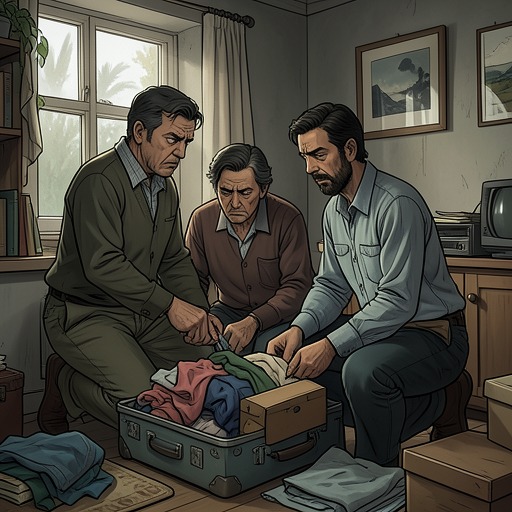
The arrangement gives Pfeffer a bed in Anne’s room, while Margot moves to a folding bed; after he arrives, Margot instead sleeps in her parents’ bedroom. The change brings a new person into Anne’s private space and imposes another adjustment on a household already living with limited room and strict routines. The diary’s account of the arrival makes the personal cost of adding a refugee concrete: shelter means safety from immediate arrest, but it requires the residents to redistribute sleeping space and accept still closer quarters.
Life Under Concealment
Pfeffer’s safety depends on the concealed household’s routines and on help from people outside it. A greengrocer suspects that people are hiding in the building and deliberately brings potatoes from the Wehrmacht to the private office at lunchtime, when warehouse employees are away. The diary’s account places Pfeffer within this precarious network of concealed food deliveries and carefully chosen moments. Ordinary provisions arrive under the shadow of suspicion; the helpers’ timing is part of the Annex’s protection.
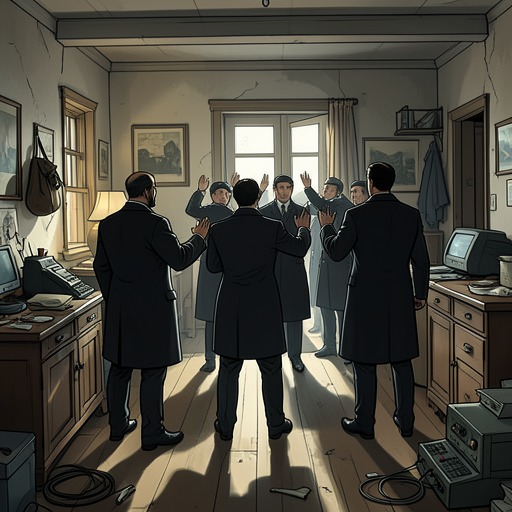
The danger is not abstract. During a later break-in, Peter notices at seven in the morning that both the warehouse door and the street door are open. He reports it to Pim, who tunes the radio to a German station and locks the private-office door; upstairs, the residents follow their security rules by staying quiet, avoiding water, dressing by eight, and not using the bathroom. The burglars force doors with a crowbar, steal cashboxes, blank checkbooks, and the household’s entire allotment of 330 pounds of sugar, then try the next floor. The entry illuminates the conditions under which Pfeffer and the other residents live: their concealment depends not only on the bookcase but on the discipline to remain still while strangers may be in the building.
A more serious breach prompts further restrictions. The residents are told that Pfeffer will do his work in the bathroom, Peter will patrol between eight-thirty and nine-thirty, and Peter may no longer leave his window open after someone from Keg’s notices it. They can no longer flush the toilet after nine-thirty at night. Mr. Sleegers is hired as a night watchman, and an underground carpenter is expected to build a barricade from the white Frankfurt bedsteads. These rules make the cost of hiding legible in domestic detail: work and bodily needs must yield to the possibility of discovery, and furniture may have to serve as a defense.
Conflict and Reconciliation
The growing danger does not erase disputes among the residents. At one point Pfeffer is forbidden to sit in Mr. Kugler’s office on Saturday afternoons or Sundays, because the manager of Keg’s might hear him next door. He goes and sits there anyway. Mr. van Daan is furious, and Otto Frank goes downstairs to confront Pfeffer. Pfeffer offers an excuse that does not persuade Otto; afterward, Otto keeps his dealings with him to a minimum because Pfeffer has insulted him. Anne does not know what Pfeffer said, only that it must have been serious enough to leave the relationship strained.
The quarrel carries into the approach of Pfeffer’s birthday. Anne wonders how he can celebrate or accept gifts while refusing to speak to others. Yet the conflict does not remain fixed. On Saturday evening at dinner, Pfeffer apologizes in Dutch, and Mr. van Daan is immediately reconciled with him. Anne remarks that Pfeffer must have spent the day practicing his speech, a small observation that turns the apology into an act of preparation rather than a sudden, effortless resolution.
Pfeffer’s birthday then passes without incident. The van Pels family gives him a jar of piccalilli and razor blades; Otto gives him a bottle of 1919 wine, Mr. Kugler a jar of lemon syrup, Miep a book, and Bep a plant. Pfeffer responds by treating everyone to an egg. The exchange restores the household’s ordinary rituals of gifts and shared food, but its details also reveal the limits within which such rituals take place: a jar, a book, a plant, and one egg acquire the weight of scarce provisions and repaired relations.
Death and Narrative Significance
The postwar account records that Pfeffer died on December 20, 1944, in Neuengamme concentration camp, after being transferred there from either Buchenwald or Sachsenhausen. The uncertainty about his route does not obscure the decisive fact: the dentist who entered the Annex seeking refuge did not survive Nazi persecution. His death gives the diary’s account of his arrival a terrible retrospective edge. The household’s careful meeting place, hidden entrance, redistributed beds, and rules about noise were attempts to preserve life; they could not protect him from eventual deportation and death.
Pfeffer’s place in the narrative is shaped by the tension between collective danger and intimate proximity. His presence is made possible by a decision about risk, a timed passage through the office, and the cooperation of helpers; once inside, it changes the use of a bedroom and brings him into conflict and eventual reconciliation with the others. Anne’s record does not provide a full account of his inner life. Instead, it preserves him through concrete episodes: the astonishment with which he discovers the hidden family, the office he is forbidden to use, the apology in Dutch, the birthday gifts, and the egg he shares. Together these details show how persecution presses itself into the smallest arrangements of domestic life, while also leaving room for apology, generosity, and temporary peace.